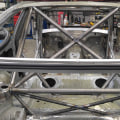
The weight of a race car is a fundamental factor that significantly influences its overall performance on the track. In the world of racing, every ounce counts, and understanding how weight affects speed, handling, and tire wear is crucial for both engineers and drivers. A lighter car can accelerate faster, brake more efficiently, and navigate corners with greater agility. Conversely, a heavier vehicle may struggle to keep pace, especially in competitive environments where milliseconds can determine victory or defeat. Moreover, the importance of weight in racing extends beyond mere speed.
It plays a vital role in the car's balance and stability. A well-distributed weight allows for better traction and control, which are essential for maintaining high speeds through turns. Engineers meticulously calculate the optimal weight distribution during the race car fabrication process to ensure that the vehicle performs at its best under various conditions. As we delve deeper into this topic, we will explore how race car designers utilize advanced materials and innovative engineering techniques to minimize weight without compromising safety or structural integrity. Understanding these principles not only enhances our appreciation for the sport but also highlights the intricate relationship between a race car's weight and its performance capabilities.
The Physics of Weight in Racing
Understanding the physics of race car weight is essential for optimizing performance on the track.The weight of a race car directly influences its acceleration, handling, and braking capabilities. A lighter car can accelerate faster, while a heavier car may struggle to achieve the same speed due to increased inertia.One of the critical aspects of weight in racing is weight distribution. This refers to how the total weight of the car is distributed across its four wheels. An ideal weight distribution enhances traction and stability, allowing for better cornering and braking performance.
For instance, a car with a 50/50 weight distribution between the front and rear axles tends to handle more predictably than one that is front- or rear-heavy.The center of gravity (CG) also plays a pivotal role in a race car's dynamics. A lower center of gravity generally improves handling by reducing body roll during turns. This is why many race cars are designed with a low CG, achieved through strategic placement of heavy components like the engine and transmission. Additionally, adjusting the height of the suspension can further influence the CG, allowing engineers to fine-tune performance based on specific track conditions.
- Acceleration: A lighter car accelerates more quickly due to less mass needing to be moved.
- Handling: Proper weight distribution ensures better grip and control during turns.
- Braking: A well-balanced weight allows for more effective braking without losing traction.
By optimizing these factors, they can create vehicles that not only meet competitive standards but also excel in various racing conditions.
How Weight Affects Race Car Performance
The weight of a race car plays a crucial role in determining its overall performance. Several key factors are influenced by the car's weight, including acceleration, handling, and braking distance. Understanding these relationships is essential for teams during the race car fabrication process.Acceleration
A lighter race car can accelerate more quickly than a heavier one, as it requires less force to increase its speed. This is particularly important in racing, where every millisecond counts.
Teams often strive to minimize weight while ensuring that the car remains structurally sound and safe. The balance between weight reduction and durability is a critical consideration during the design phase.
Handling
The distribution of weight also affects a race car's handling characteristics. A well-balanced car, with weight evenly distributed, will corner more effectively, allowing drivers to maintain higher speeds through turns. If a car is too heavy on one side, it can lead to understeer or oversteer, making it difficult to control.
Engineers often use advanced materials and design techniques to optimize weight distribution during fabrication.
Braking Distance
Weight significantly impacts braking distance as well. A heavier car requires more distance to come to a complete stop compared to a lighter vehicle. This can be a decisive factor in races where quick stops are necessary, such as during pit stops or when avoiding collisions. Teams must carefully consider the weight of components like brakes and tires to ensure optimal performance without compromising safety.In summary, the interplay between weight and performance metrics such as acceleration, handling, and braking distance is vital in race car fabrication.
Teams continuously seek innovative ways to reduce weight while enhancing performance, ensuring they remain competitive on the track.
Weight Reduction Techniques in Race Car Fabrication
In the competitive world of race car fabrication, reducing weight is crucial for enhancing performance. Lighter cars can accelerate faster, handle better, and achieve higher speeds, making weight reduction techniques a top priority for engineers and designers.One of the most effective methods for reducing weight is the selection of advanced materials. Here are some commonly used materials in race car fabrication:- Carbon Fiber: Known for its high strength-to-weight ratio, carbon fiber is often used in body panels and structural components. Its lightweight nature allows for significant weight savings without compromising safety.
- Aluminum: This metal is lighter than steel and offers good strength, making it a popular choice for chassis and suspension components.
Aluminum can be easily shaped and welded, which aids in the fabrication process.
- Titanium: While more expensive, titanium provides excellent strength and is often used in critical areas where weight savings are essential, such as exhaust systems and fasteners.
- Finite Element Analysis (FEA): This computer simulation technique helps identify areas where material can be removed without sacrificing structural integrity.
- Tubular Structures: Using tubular designs for frames and roll cages can reduce weight while maintaining strength, as these shapes distribute stress more effectively.
- Minimizing Components: Streamlining the number of parts in a race car not only reduces weight but also simplifies assembly and maintenance.
The Role of Technology in Optimizing Race Car Weight
In the competitive world of race car fabrication, the weight of a vehicle plays a crucial role in its overall performance. To achieve the optimal balance between weight reduction and structural integrity, engineers increasingly rely on advanced technology throughout the design and manufacturing processes.Utilizing CAD Software
Computer-Aided Design (CAD) software has revolutionized the way race cars are designed.This technology allows engineers to create detailed 3D models of race cars, enabling them to visualize and manipulate every component with precision. By using CAD, engineers can experiment with different materials and geometries to find the lightest possible configurations that still meet safety and performance standards.
Simulation Tools for Performance Analysis
Beyond design, simulation tools play a vital role in optimizing race car weight. These tools allow engineers to conduct virtual tests on their designs, assessing how changes in weight distribution affect handling, speed, and stability. For instance, finite element analysis (FEA) can predict how materials will behave under stress, helping teams identify areas where weight can be reduced without compromising safety.Material Selection and Innovation
The choice of materials is another critical factor in race car fabrication.Advanced composites, such as carbon fiber and aluminum alloys, offer high strength-to-weight ratios that are essential for modern racing. Engineers use simulation tools to evaluate these materials' performance characteristics, ensuring that they select options that provide both durability and weight savings.
Iterative Design Process
The integration of technology into the design process fosters an iterative approach. Engineers can quickly modify designs based on simulation results, allowing for rapid prototyping and testing. This agility not only accelerates the development timeline but also leads to more innovative solutions for weight reduction.In conclusion, the role of technology in optimizing race car weight cannot be overstated.Through the use of CAD software, simulation tools, and advanced materials, engineers are better equipped to create high-performance race cars that push the limits of speed while maintaining safety and reliability.
Case Studies: Successful Weight Management in Racing Teams
In the world of motorsports, weight management is a critical factor that can determine the success of a racing team. Several teams have implemented innovative strategies to optimize their race car's weight, leading to remarkable performance improvements. Here are a few notable case studies:1.Team Penske: The Power of Carbon Fiber
Team Penske, a dominant force in IndyCar racing, has leveraged advanced materials to reduce weight without compromising strength. By utilizing carbon fiber composites in their chassis and bodywork, they have achieved significant weight savings.This material not only enhances aerodynamics but also improves fuel efficiency, allowing for longer stints between pit stops.
2.Red Bull Racing: Aerodynamic Innovations
Red Bull Racing has consistently pushed the boundaries of race car fabrication by focusing on aerodynamics as a means of weight management. Their engineers have developed intricate designs that minimize drag while maximizing downforce. For instance, the use of lightweight wing components has allowed them to maintain optimal performance at high speeds while keeping the overall weight within competitive limits.3.Ferrari: Balancing Weight and Power
Ferrari's approach to weight management involves a meticulous balance between engine power and vehicle weight. By employing lightweight materials in their engine components and optimizing the placement of heavy parts, they ensure that their cars remain agile and responsive on the track.This strategy has been pivotal in their success in Formula 1, where every gram counts.
4.Toyota Gazoo Racing: Data-Driven Decisions
Toyota Gazoo Racing utilizes data analytics to inform their weight management strategies. By analyzing performance data from previous races, they identify areas where weight reduction can yield the most significant benefits. This data-driven approach allows them to make informed decisions about which components to modify or replace, ensuring that they stay competitive.These case studies illustrate that effective weight management strategies are not just about reducing mass; they involve a comprehensive understanding of materials, aerodynamics, and data analysis. As racing technology continues to evolve, teams that prioritize these aspects will likely maintain a competitive edge on the track.Frequently Asked Questions About Race Car Weight and Fabrication
When it comes to race car fabrication, understanding the impact of weight on performance is crucial.Here are some frequently asked questions that can help clarify this important aspect:
- How does weight affect a race car's speed?
The weight of a race car directly influences its acceleration and top speed. A lighter car can accelerate faster and achieve higher speeds due to reduced inertia. However, it’s essential to balance weight with structural integrity and safety. - What is the ideal weight for a race car?
The ideal weight varies depending on the type of racing and regulations. For example, Formula 1 cars have strict weight limits, while other racing categories may allow for more flexibility.Generally, teams aim for the lightest possible design without compromising performance.
- How is weight distribution managed in race car fabrication?
Weight distribution is critical for handling and stability. Engineers use various techniques, such as placing heavier components like the engine low in the chassis or adjusting the placement of fuel tanks, to achieve optimal balance. - Can adding weight improve traction?
Yes, in some cases, adding weight can enhance traction, especially in rear-wheel-drive cars. However, this must be carefully calculated to avoid negatively impacting acceleration and overall performance. - What materials are used to reduce weight in race cars?
Advanced materials such as carbon fiber, aluminum alloys, and titanium are commonly used in race car fabrication to minimize weight while maintaining strength and safety standards.
Conclusion: The Balance Between Weight and Performance in Race Car Fabrication
In conclusion, the intricate relationship between a race car's weight and its performance is a critical consideration in race car fabrication.Throughout this discussion, we have explored how weight impacts various aspects of a race car, including acceleration, handling, and overall speed. Understanding this balance is essential for engineers and designers aiming to create high-performing vehicles that can compete at the highest levels.As we have seen, a lighter race car can offer significant advantages, such as improved acceleration and better cornering capabilities. However, achieving an optimal weight requires careful planning and execution during the fabrication process. Here are some key takeaways:
- Material Selection: The choice of materials plays a pivotal role in determining the overall weight of the vehicle.
Advanced composites and lightweight metals are often favored to reduce mass without compromising strength.
- Weight Distribution: Proper weight distribution is crucial for maintaining balance and stability. Engineers must consider how each component contributes to the car's center of gravity.
- Regulatory Compliance: Different racing series have specific weight regulations that must be adhered to. This necessitates a strategic approach to ensure compliance while maximizing performance.
As technology continues to evolve, so too will the methods used in fabrication, ensuring that the quest for performance remains at the forefront of race car design.